Notes from the Future @ The Network State Conference
On Bridging the Worlds We Inherit and the Ones We Invent.

I attended the Network State Conference held by Balaji Srinivasan (author of The Network State and founder of The Network School) this Friday in Singapore. I’m not from the world of tech or crypto; I build brands, platforms, and experiences.
So, walking into this conference, I didn’t expect to find parallels between what I do and what I’d see on stage. But what delighted me was how much of what I’ve been exploring: the resurgence of physical third places and the idea of building lasting communities sat at the core of these conversations too, only framed in a more imaginative, intuitive way.


A big part of the platform I’m building: On Second Thought and Second Serve points to people, ideas, and systems imagining and shaping more nuanced futures. So I thought it would be interesting to put down a few observations from this conferences: notes on what I left feeling genuinely excited about, what I learned, and what this room of people: all thinking deeply about how we connect, live, and build seem to be collectively focusing on.
Let’s dive in! 🖤
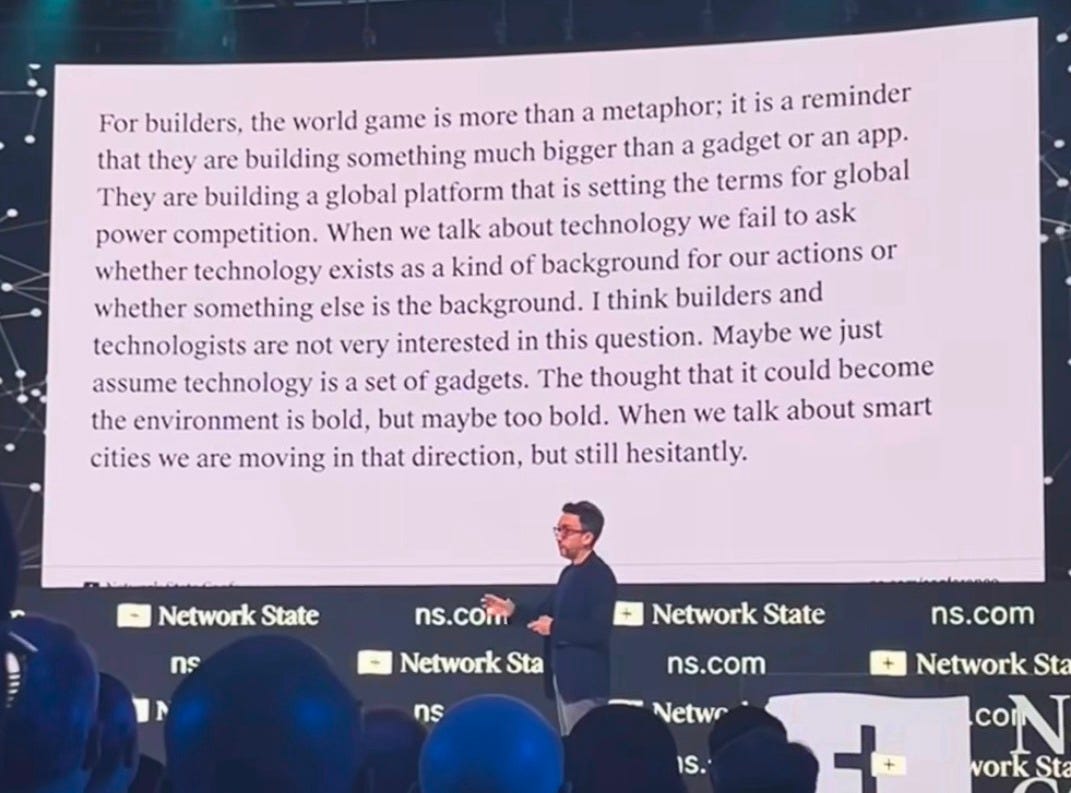
Some themes seemed to swirl through every talk and conversation:
the sense of worlds becoming programmable,
cities behaving like startups,
communities searching for new textures of belonging,
and capital accumulating faster than teams can meaningfully absorb it.
Games threaded through the discussions.
Roblox, Minecraft, even early experiments like Second Life already operate as small-scale network states. They are more than entertainment platforms; they are systems with rules, ownership, and economies that feel persistent.

That logic extends into the physical world. Singapore treats its geography as a kind of startup platform—mixed-use districts as incubators, regulatory sandboxes as MVPs, and programs like Tech.Pass designed to pull in global talent. While many countries are telling stories about automation and job loss, Singapore is telling a story about job creation. It is trying to design an ecosystem that makes founders feel at home, much the way a game makes players feel invested.
The same theme of abstraction unlocking scale appeared in programming. Every leap in computing: assembly, high-level languages, graphical interfaces was once met with skepticism. AI-driven vibe coding is the latest, and it too is being criticized as “not real coding.”

Factories, robots, even space infrastructure are moving toward software-like behavior. The result is not fewer opportunities but more complexity to manage. The emerging literacy is less about syntax and more about orchestrating intelligent agents.
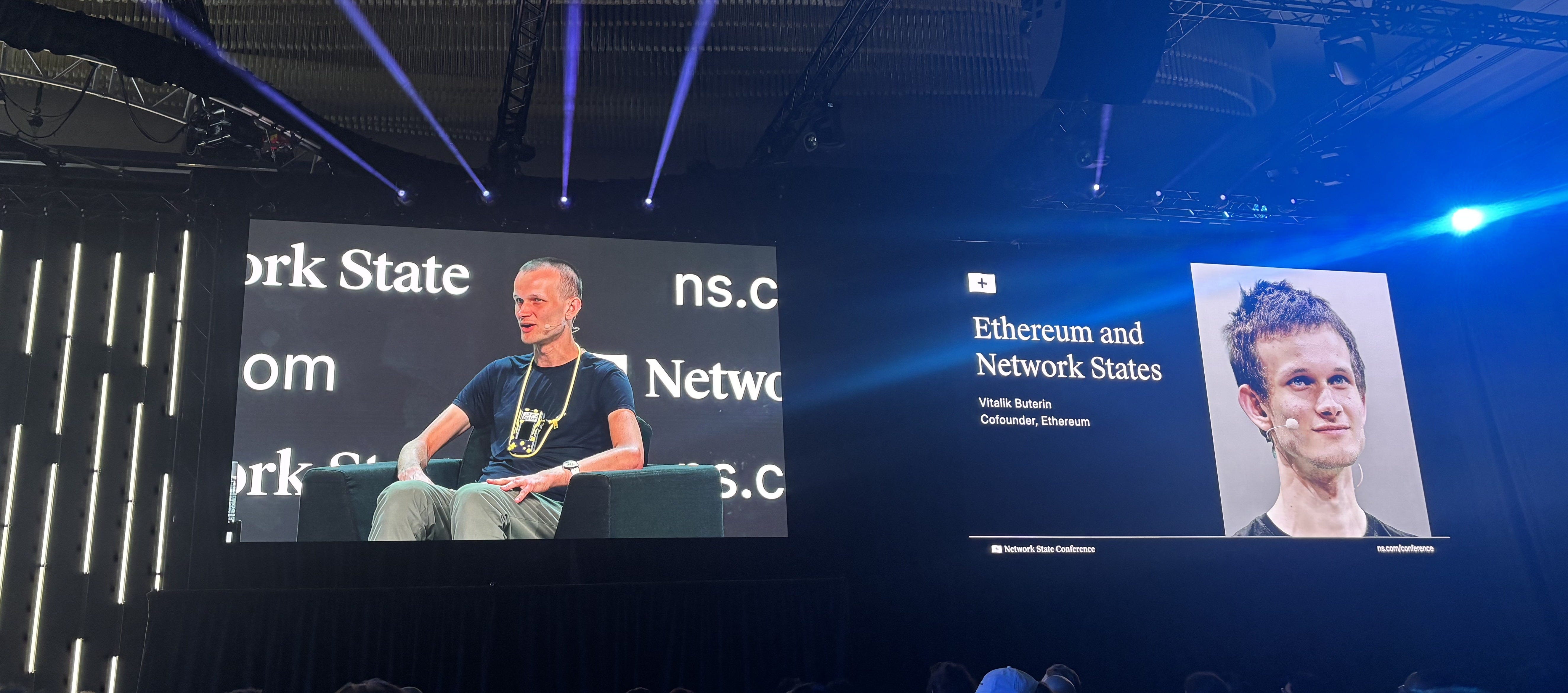
The foundations of crypto—smart contracts, DeFi, scaling—are largely in place and widely understood. The harder question now is what these tools can do that is genuinely useful for people.
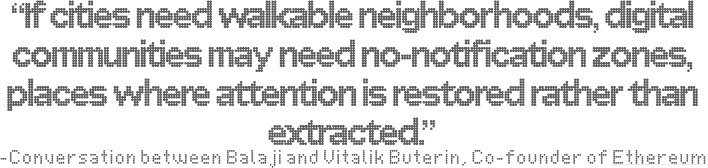
Ethereum’s experiments with funding public goods hint at how these systems could evolve fiscal layers, supporting not only protocols but the practices and cultures that grow around them.
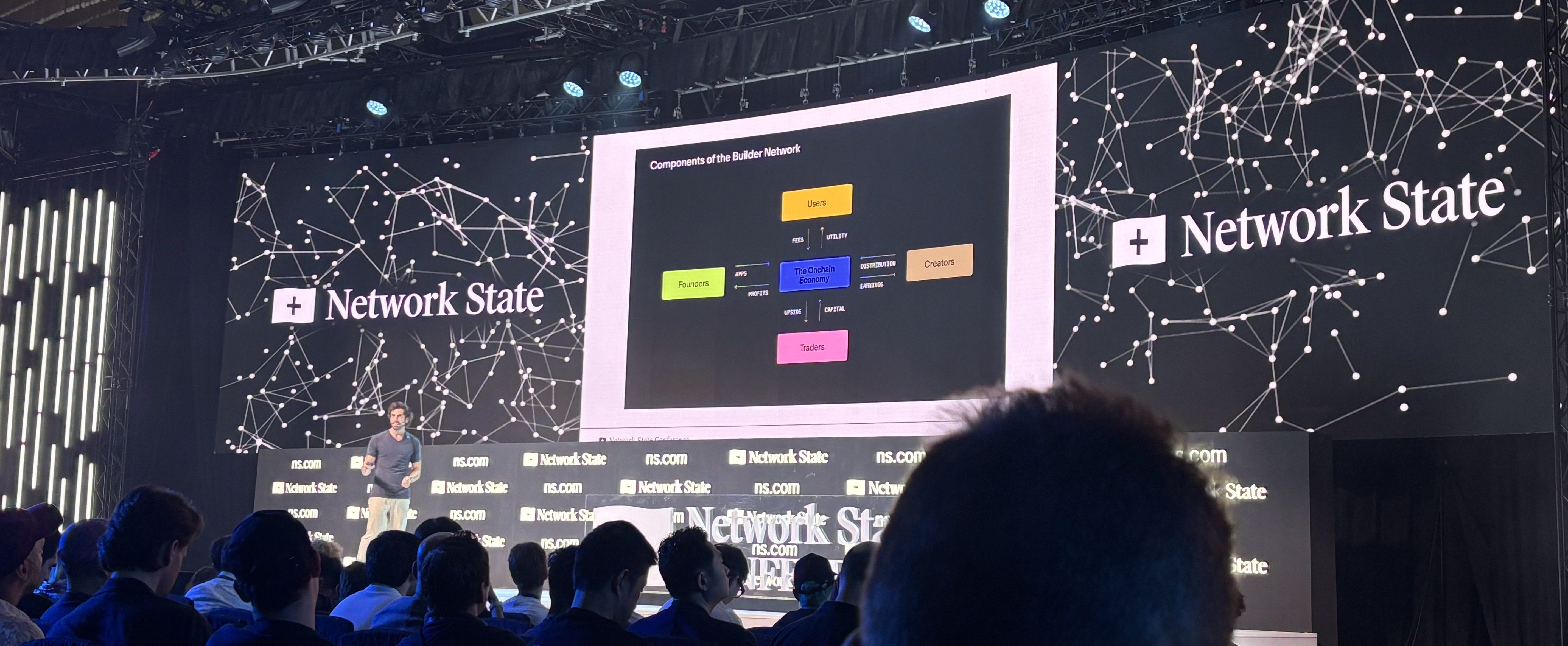
Base illustrated the onchain economy as a flywheel: users, founders, creators, and traders each feeding the loop. It looks less like a company chart and more like the metabolism of a city. That is the conceptual leap: protocols not as platforms, but as embryonic societies.
Culture ran alongside infrastructure.
What some dismiss as “AI slop” may turn out to be the awkward first drafts of a medium still finding its form, much like early blogs or YouTube videos once did. Those experimenting now will recognize its grammar sooner than others.

The most intriguing frontier may lie in heritage: the Bible, the Mahabharata, or political texts reframed and serialized through AI for contemporary audiences.
And then there is capital. Crypto has no shortage of it; treasuries and token pools accumulate quickly. The real shortage is teams. How do you translate liquidity into durable institutions? Prospera’s charter city, Farcaster’s social protocol, EigenLayer’s restaking infrastructure, and ZCash’s privacy research are all attempts, in different directions.
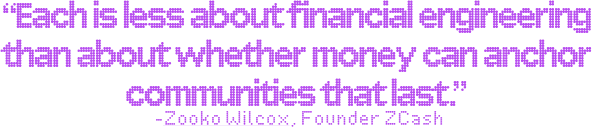
Taken together, the conference offered less a roadmap than a set of provocations. If games can become societies, and cities can behave like startups, and media can fracture into parallel streams, then what exactly are we building toward?
The capital, the infrastructure, the abstractions are already here. The unresolved work is cultural: how to translate them into communities, literacies, and institutions that people want to live inside. For now, I’m left with more questions than conclusions about the kinds of worlds we are constructing, and about the bridges we still need between the societies we inherit and the ones we are inventing.
h/t to all the incredible people on stage (that i sat for - worth checking out what they’re building!):
Bradford Cross, CEO, Alpha City
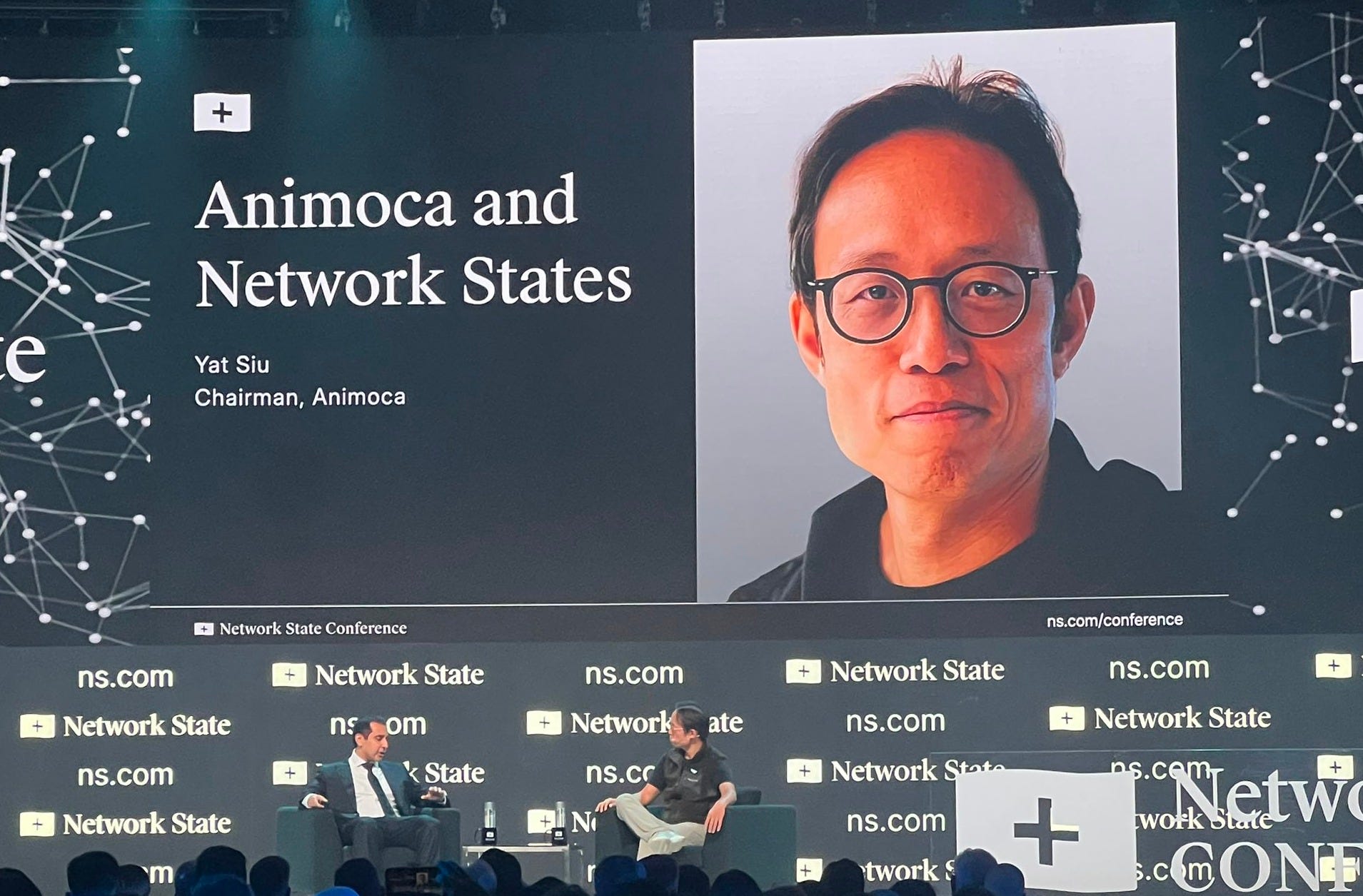
Yat Siu, Chairman, Animoca
Jacqueline Poh, CEO, JTC Corporation
Amjad Masad, CEO, Replit
Vitalik Buterin, Cofounder, Ethereum
Veronika Kapustina, CEO, TON Strategy Co.
Xen Baynham-Herd, Head of Global Growth, Base
Sreeram Kannan, Cofounder, EigenCloud
Zooko Wilcox, Cofounder, Zcash
Akshay BD, CMO, Solana Foundation
Nuseir Yassin, Founder, Nas Daily
That’s all from me, onto the next rabbit hole 🖤
Komal from —